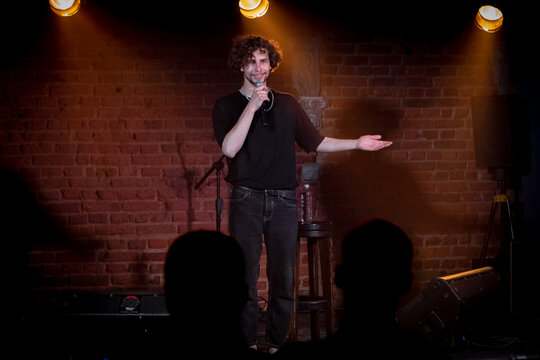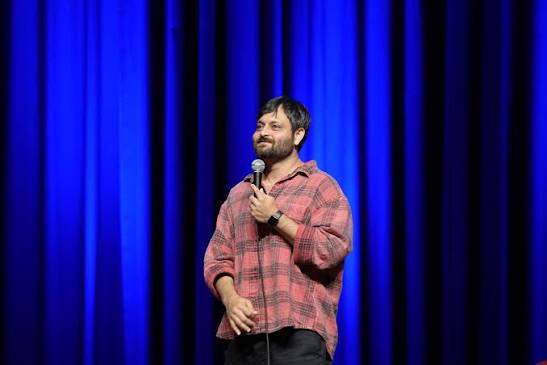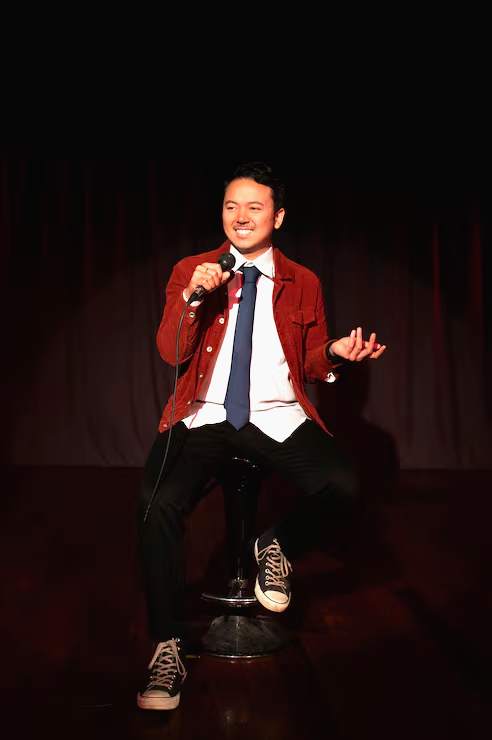
People who have never been to live comedy tend to imagine a theatre: assigned seats, a famous name, a ninety dollar ticket. That version exists, but it is maybe two percent of what is actually happening on a Tuesday in this country. The other ninety-eight percent is forty to a hundred and fifty people in a back room, five comics, and a door price under fifteen dollars.
What the room is actually like
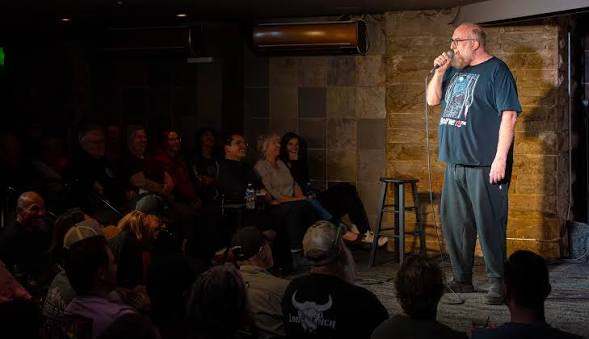
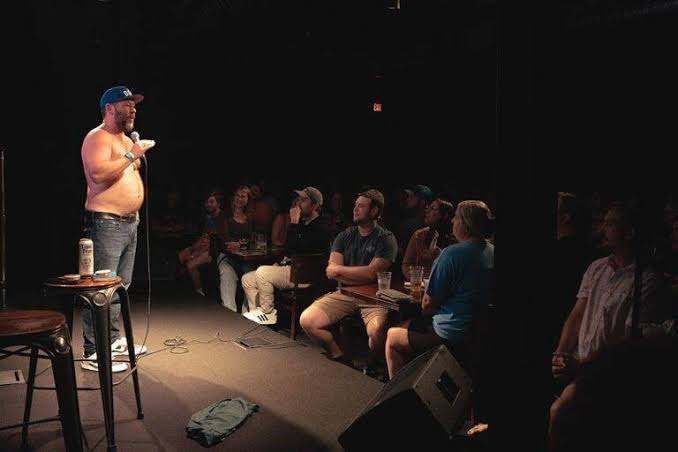
Small. That is the main thing to internalise. A typical Canadian indie comedy room seats fewer people than a school bus holds twice over. The stage might be a rug and a mic stand. The lighting is one lamp pointed at a wall. None of this is a downgrade — proximity is the entire art form. A joke that dies in a theatre kills in a room of sixty.
The shape of the night
- Doors open about thirty minutes before the listed time.
- A host opens with a few minutes of their own material and sets the tone.
- Three to eight comics do short sets — five to fifteen minutes each depending on the format.
- There may be a break. There will definitely be a bar.
- Total running time is usually ninety minutes, rarely more than two hours.
Where to sit
Middle rows, slightly off-centre. Close enough that the energy of the room reaches you, far enough back that you are clearly an audience member rather than a participant. The front row is genuinely more fun if you like being spoken to, and genuinely uncomfortable if you do not — that is the only real decision you are making.
Will they pick on you?
Probably not. Crowd work — a comic talking to the audience — is a normal part of many sets, and sitting front and centre makes you a likelier candidate. But nobody is trying to humiliate someone who paid to be there. The one reliable way to become the target is to heckle. Do not heckle. Laughing loudly is the participation everyone actually wants from you.
What it costs
Free to about twenty dollars, depending on the tier. Open mics are usually free. Indie showcases run five to fifteen at the door. Clubs with touring headliners are twenty to thirty-five, usually with a two-item minimum, which means two drinks or a drink and food per person on top.
Bring some cash. Card readers at indie rooms are a coin flip and e-transfer only works if you have signal in a basement.
Which show to pick first
Pick a booked showcase over an open mic for your very first night. Open mics are wonderful and free, but they are deliberately unpolished — you are watching people test material, and some of it will not work yet. A booked showcase gives you five comics who each chose their strongest ten minutes, which is a much more reliable introduction.
If you already know what you like, go straight to the format: stand-up for craft, improv for chaos, roast battles for volume, sketch for weirdness.
Small etiquette that matters a lot
- Phones off and out of sight. A lit screen is visible from the stage and drains the room.
- Do not talk during sets, even quietly.
- Arrive on time — walking in during someone’s set makes you briefly the show.
- Buy a drink even at a free night. Bar sales are why free comedy exists.
- Applaud the comic who bombed. Especially them.
Finding one tonight
Set your city in Where2Laugh and the feed shows every room running tonight, ordered by what starts next, with the price and format on each listing. Filter to free if you want a zero-risk first attempt. You contact the room directly — we never sell tickets and never add a fee.