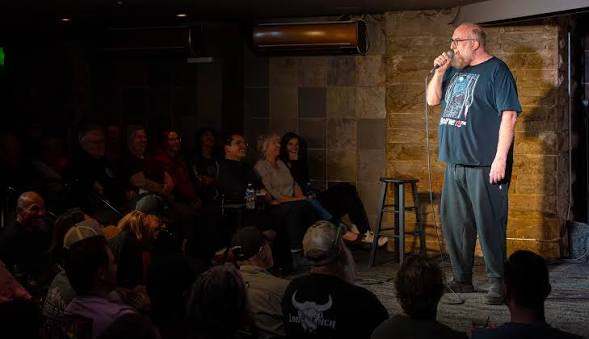




Ask someone who does not go to live comedy what a comedy show is, and they will describe stand-up. It is the default image: one person, one mic, a set list they have been sharpening for a year. Improv is the other half of the room and works on nearly opposite principles.
Stand-up: written, refined, owned
A stand-up set is authored material. Every beat has been tried, cut, reordered and re-tried across dozens of rooms. When you watch a comic do ten minutes, you are watching something closer to a piece of writing being performed than to spontaneous conversation — even when it sounds completely offhand, especially then.
That makes stand-up a craft showcase. The pleasure is in construction: how a premise turns, how a callback lands twelve minutes later, how one word choice does the work of a whole sentence. It rewards close attention and it can be genuinely virtuosic.
Improv: invented, collective, gone forever
An improv show starts with nothing. The troupe asks the audience for a word, a place, a relationship — and then builds scenes out of it in real time, following each other rather than a script. What you watch has never existed before and will never exist again, including for them.
The pleasure is completely different: it is the pleasure of watching people take risks together and catch each other. The best moments in improv are ones where the performers are visibly surprised, and that cannot be manufactured.
What the rooms feel like
- Stand-up rooms — attentive, quieter between laughs, more individual. The audience is watching one person work.
- Improv rooms — louder, warmer, more communal. The audience is part of the machine, and the energy is closer to a sport.
Will you be involved?
In improv, only at the start and only verbally — a troupe asks for a suggestion, someone shouts one. You are essentially never pulled on stage without volunteering. In stand-up, crowd work means a comic may talk to you directly, especially in the front row. Neither format is trying to embarrass you.
What each costs in Canada
Improv tends to run through theatre companies and training centres with regular schedules, which puts most shows in the ten to twenty dollar range with predictable start times. Stand-up spans the widest range in comedy: free open mics at one end, thirty-five dollar club headliners at the other, and a large indie middle at five to fifteen.
If you want the cheapest possible entry to live comedy, stand-up’s free tier is bigger. If you want the most reliable good time for a group, improv is easier to recommend blind.
Which to pick tonight
- Group of friends, mixed tastes — improv. Higher floor, more communal, nobody sits in silence.
- You like writing and craft — stand-up. Booked showcase over an open mic for your first time.
- You are nervous about interaction — improv, middle rows.
- You want the cheapest possible night — a free stand-up open mic.
- You want maximum volume and chaos — a roast battle, which is stand-up’s loudest cousin.
The honest answer
See both. They are different enough that liking one tells you almost nothing about the other, and most people who go to live comedy regularly end up alternating depending on the night and who they are with.
Finding both in one place
Where2Laugh filters by format, so you can pick your kind of funny and see only that — improv, stand-up, open mic, roast, sketch — in your city, ordered by start time. One feed, both crafts, no ticketing fee on either.